Design Hive Workshop: A Marine Vertiport Design Challenge
May 7, 2026
Fast + Epp and Perkins&Will convened in our Vancouver office’s Concept Lab for our first shared Design Hive between the two firms. These immersive workshops are centered on experimentation, collaboration, and the cross-pollination of ideas between architects and engineers.
The Challenge: A Marine Vertiport
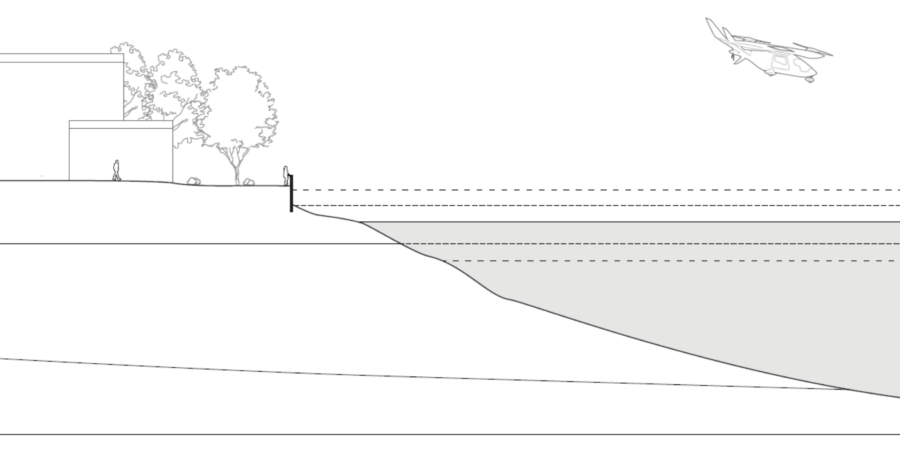
With growing urban congestion and the need for rapid regional transportation, the demand for electric vertical take-off and landing (eVTOL) aircraft solutions have accelerated. Teams were tasked to develop either a floating and tethered or a fixed marine helipad structure that can accept one eVTOL aircraft. The structure must provide a Touchdown and Lift-off Area (TLOF) within a Final Approach and Take-off Area (FATO), along with a wheelchair accessible passenger and service connection to shore. Other considerations included wave action, tidal variation, sea level rise, wind loads, and seismic resilience.
The Process
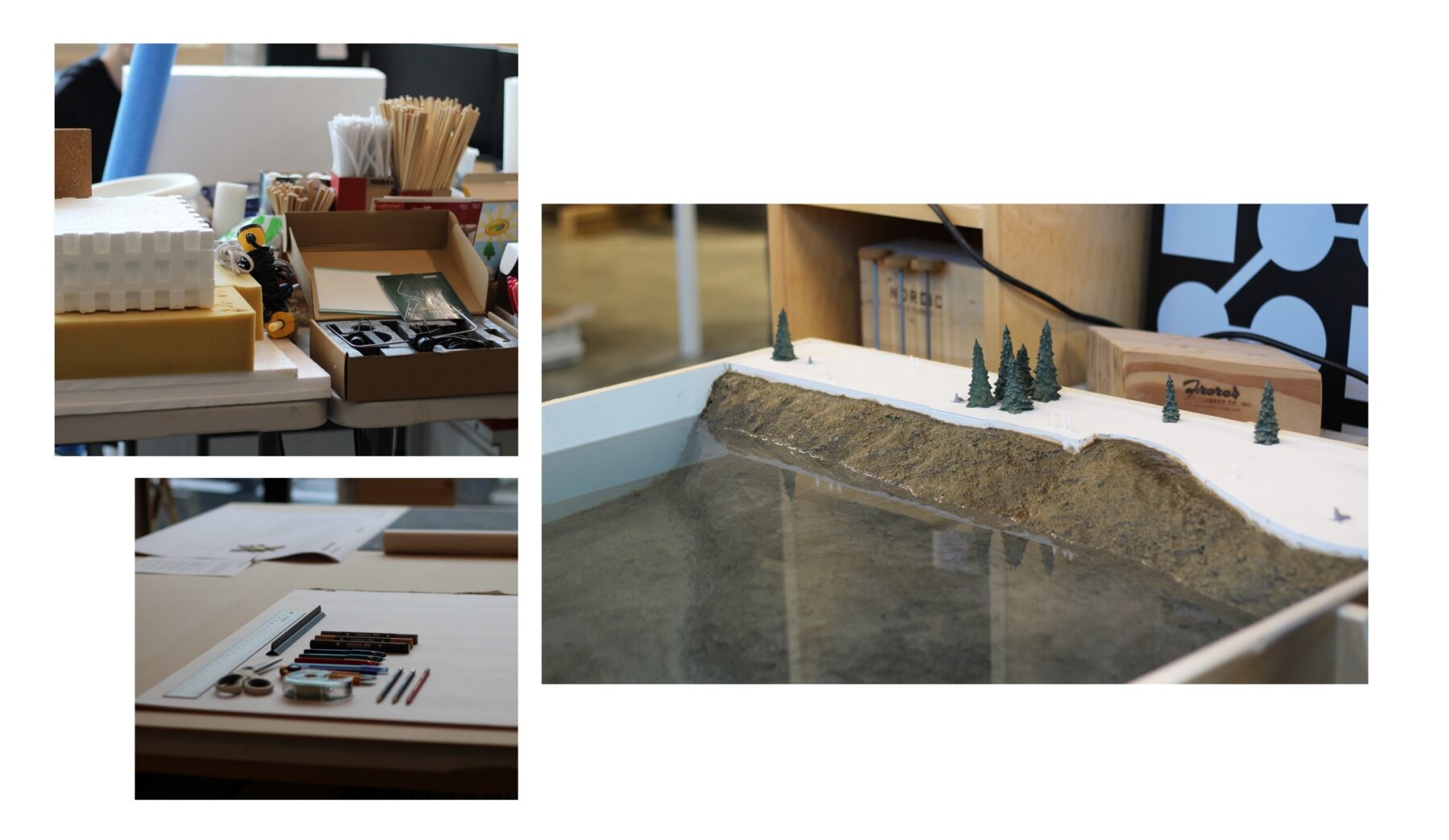
Working in teams of two architects and two engineers, participants were given just four hours to brainstorm, design, build, and present their concepts to a panel of judges. One hour into the session, roaming mentors from Perkins&Will and Fast + Epp circulated to offer real-time feedback, helping teams refine their ideas and strengthen their proposals.
A range of materials and tools was provided throughout, ensuring each team had what they needed to bring their concepts to life. To ground the designs in real-world conditions, a float tank was built specifically for the challenge, allowing teams to test and showcase their models in a simulated marine environment.
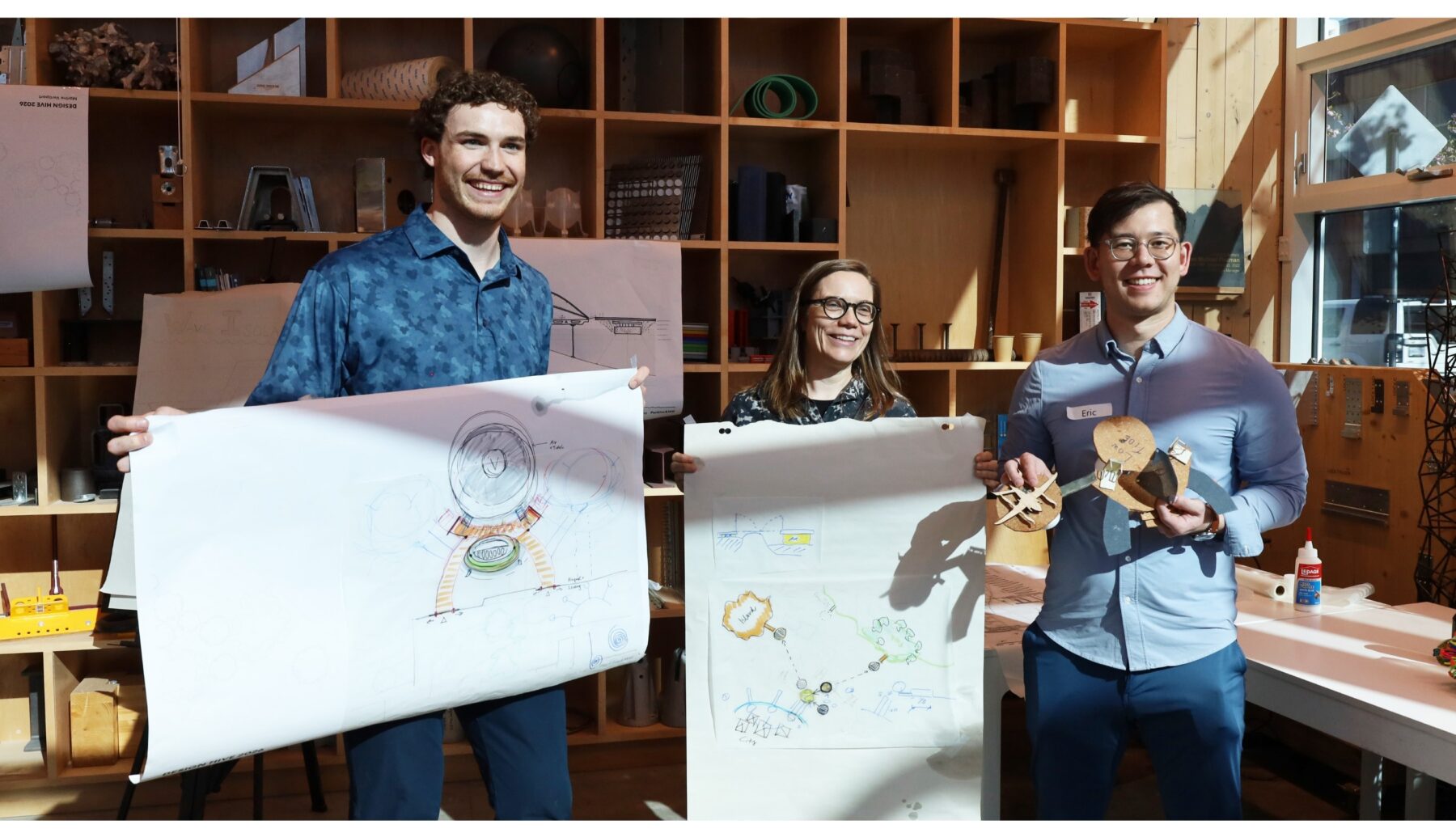
Team One from left to right: Michael Dowhaniuk (Fast + Epp), Ivonne Voelkel (Perkins&Will), Eric Bohn (Fast + Epp). Missing from photo: Kevin Casey (Perkins&Will).
Team one’s concept focuses on engaging and inviting the entire community rather than creating an isolated station. The design incorporates detachable landing pads that can move to other transportation along the coastline, forming an integrated system. The structure is described as organic in form, with rounded edges and stepped surfaces that allow marine animals to rest. Community engagement is a key part of the design approach.
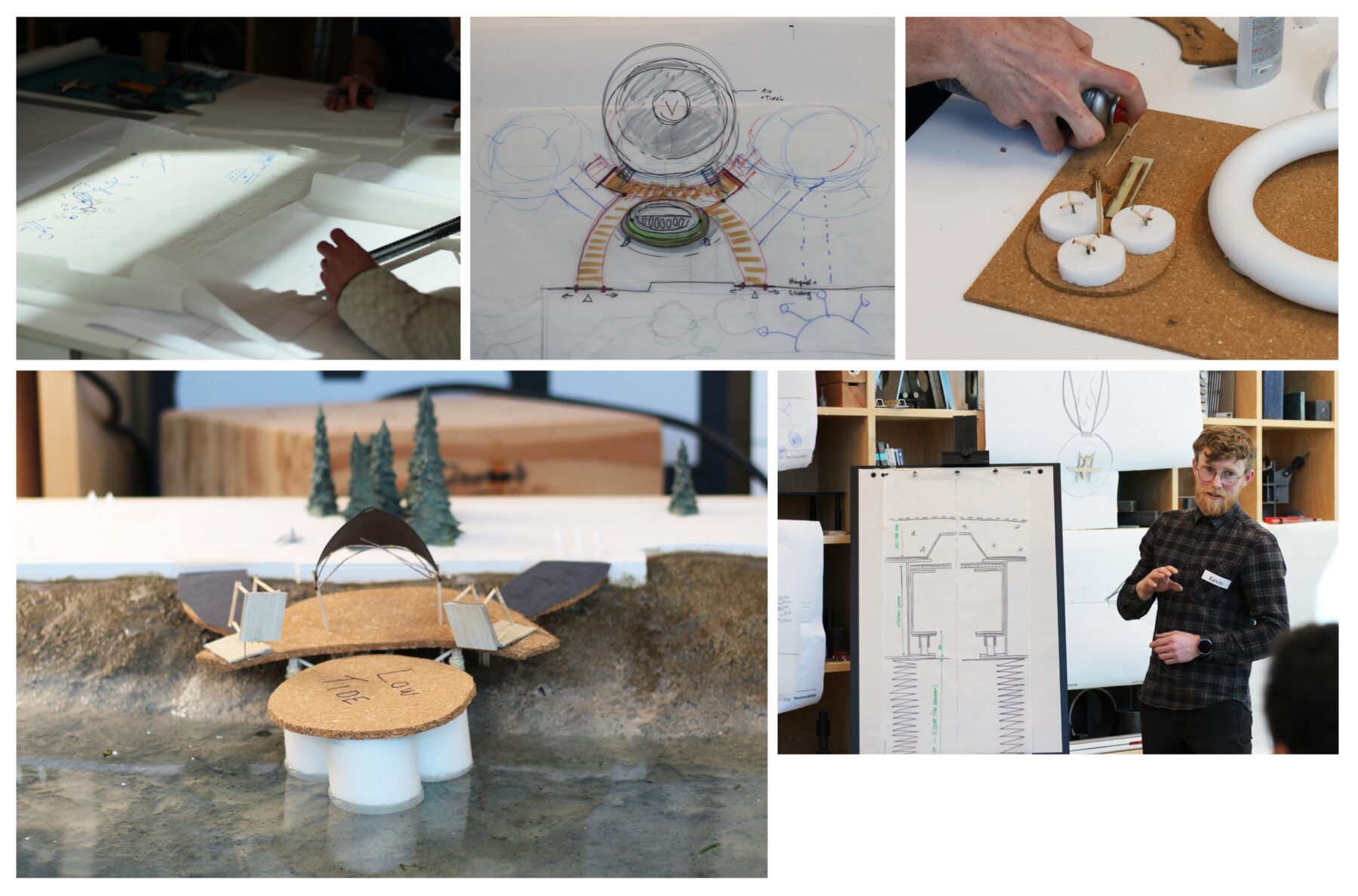
The proposal also includes a solar-powered charging station to support clean energy use. The interface to land is designed with a hinged and sliding connector that can adjust based on tides and changing water levels, allowing the structure to respond to its coastal environment.
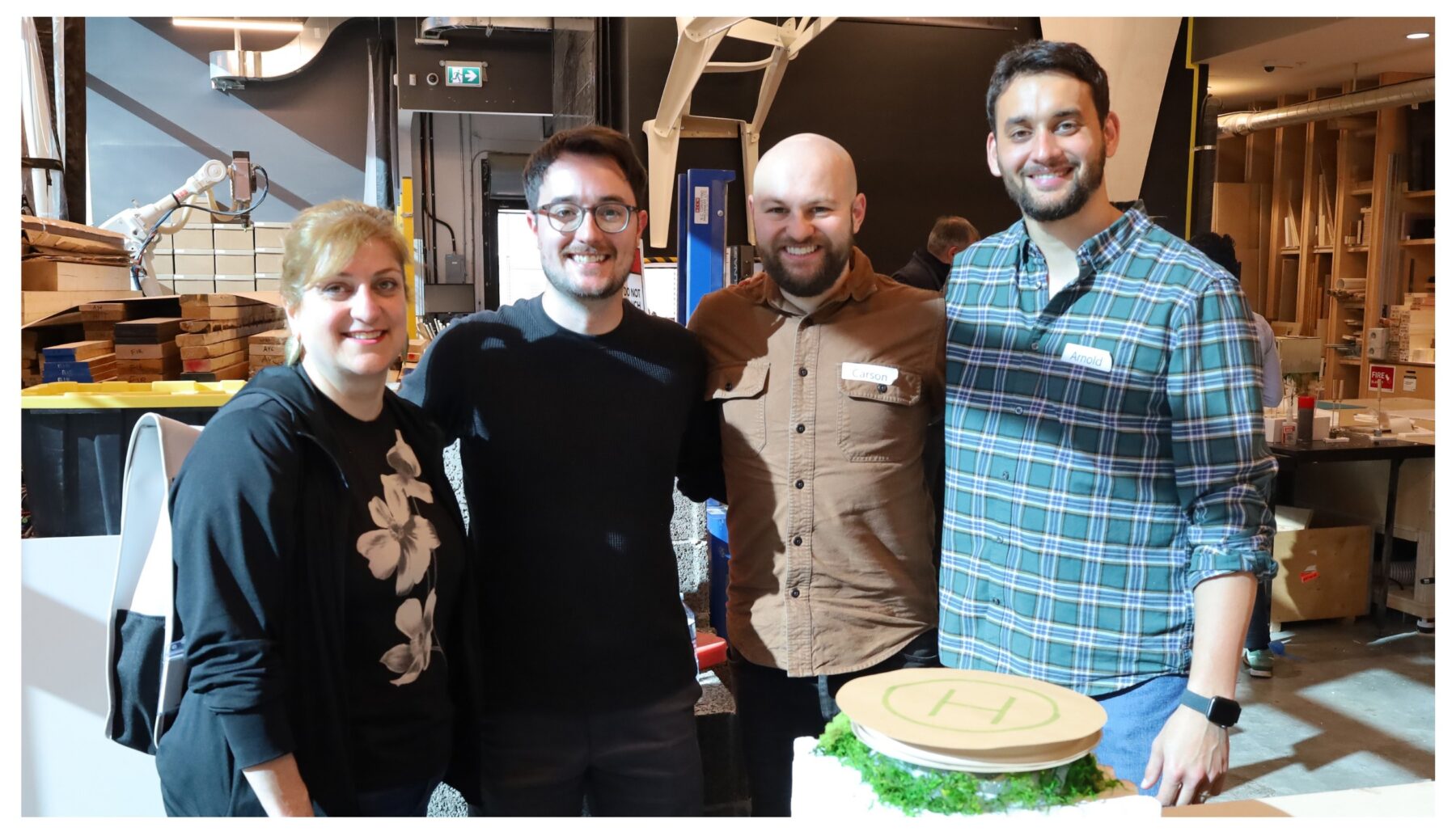
Team Two from left to right: Fargol Moshiri (Perkins&Will), Caolan McCaughley (Perkins&Will), Carson Baker (Fast + Epp), and Arnold Meiners (Fast + Epp)
Team two’s priority was to accommodate for the vigorous movement of the water, so they developed a wave isolated vertiport that is supported by a pontoon on the bottom. To assist the acceptance of new technology into the community, they created a sculptural bridge connecting the land and the platform, making the entire journey an experience for passengers.
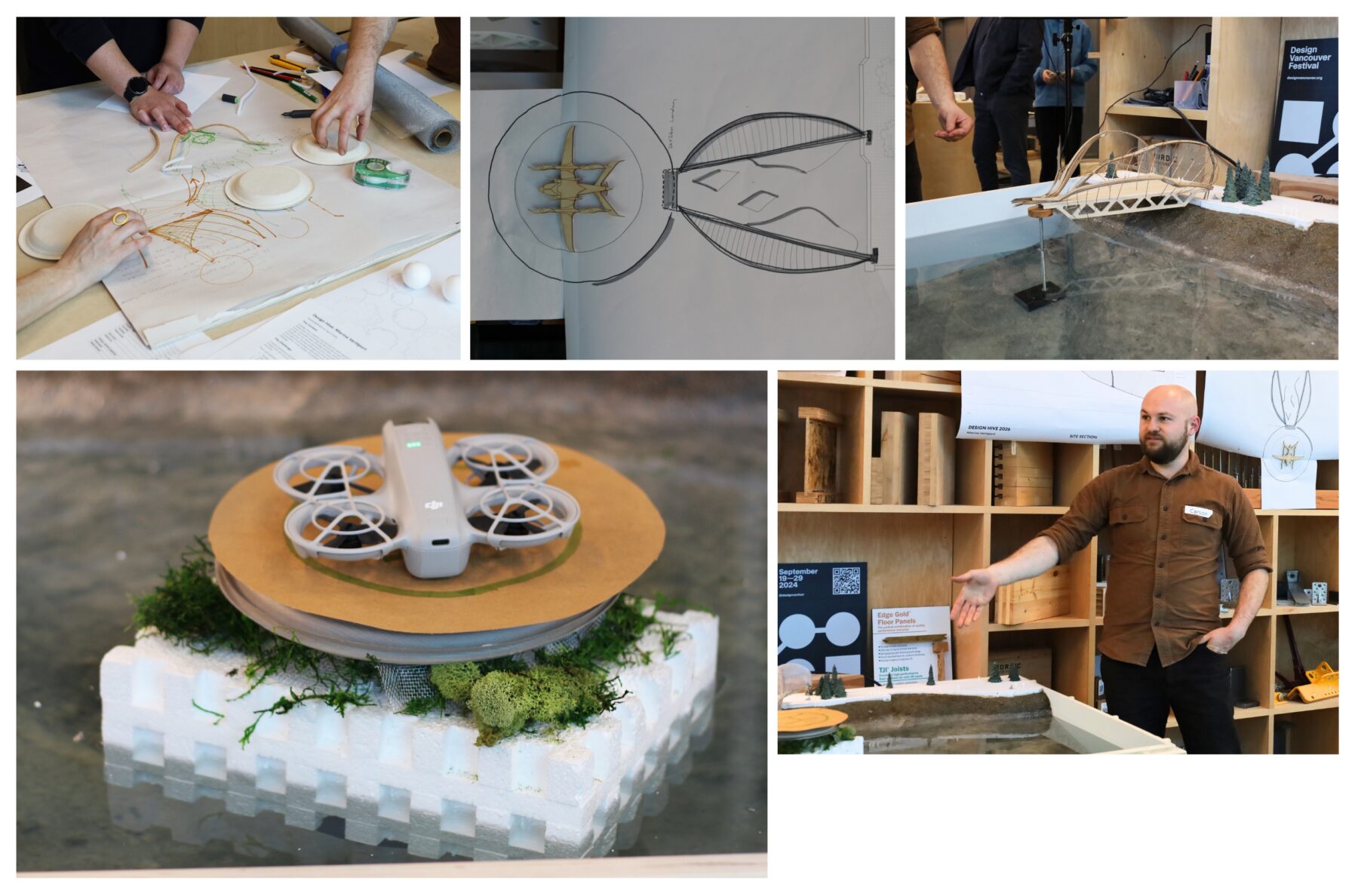
The design includes a proposed “wave isolator” detail composed of an interior slider, a pivot point, a hydrophobic concrete plinth, and base slides at both the top and bottom. Together, these elements are intended to manage movement between the structure and the water.
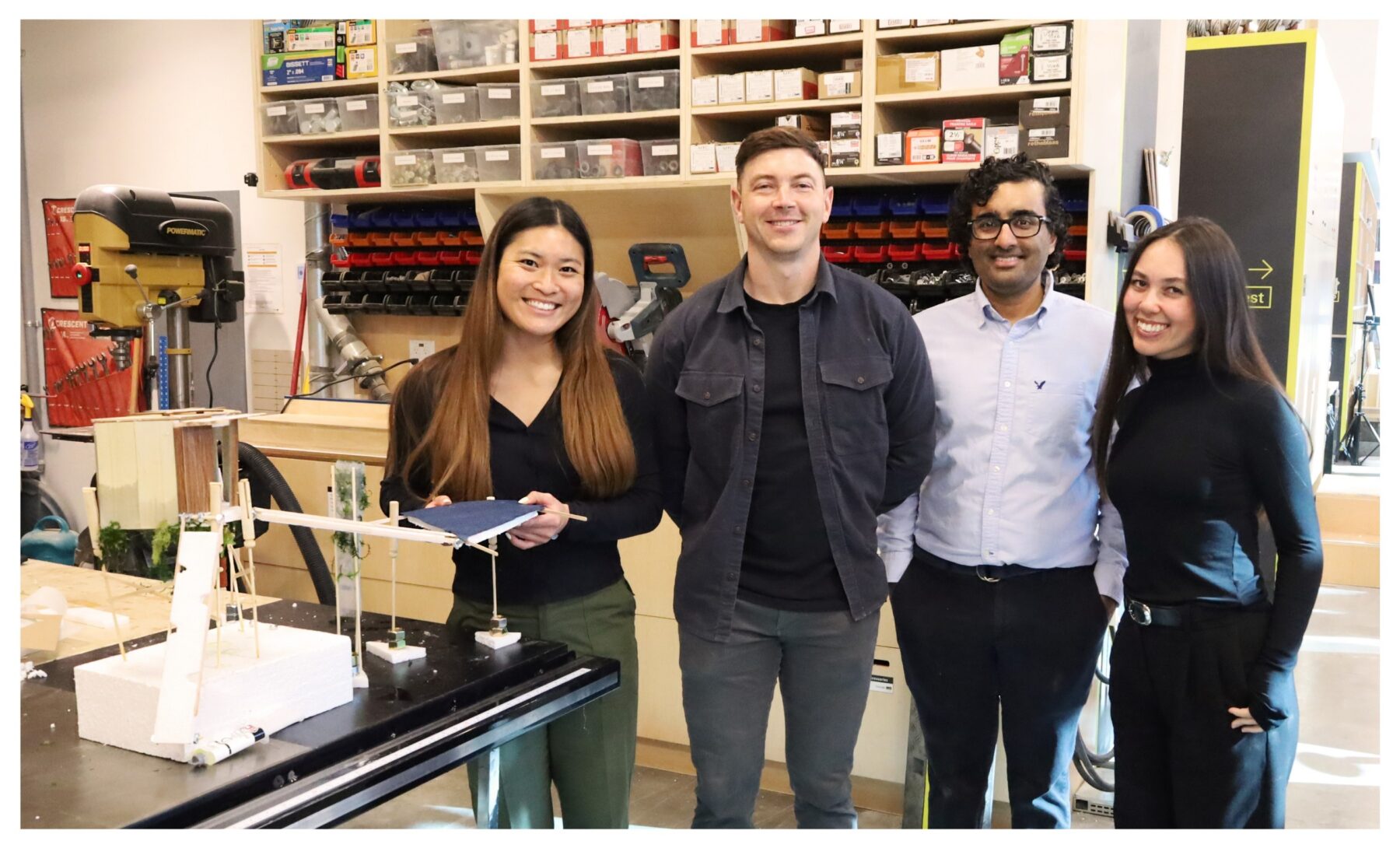
Team Three from left to right: Jenna Louie (Fast + Epp), Kent Pretorius (Fast + Epp), Glenn Veigas (Perkins&Will), and Emily Chee (Perkins&Will)
Team three’s concept is a movable platform that adapts with tides and changing sea levels. Anchor points allow vertical movement so the structure can rise and fall with the water. Pods extend out to sea and form a modular system that can be added to over time, connected by walkways and creating an opportunity for growth in the future.
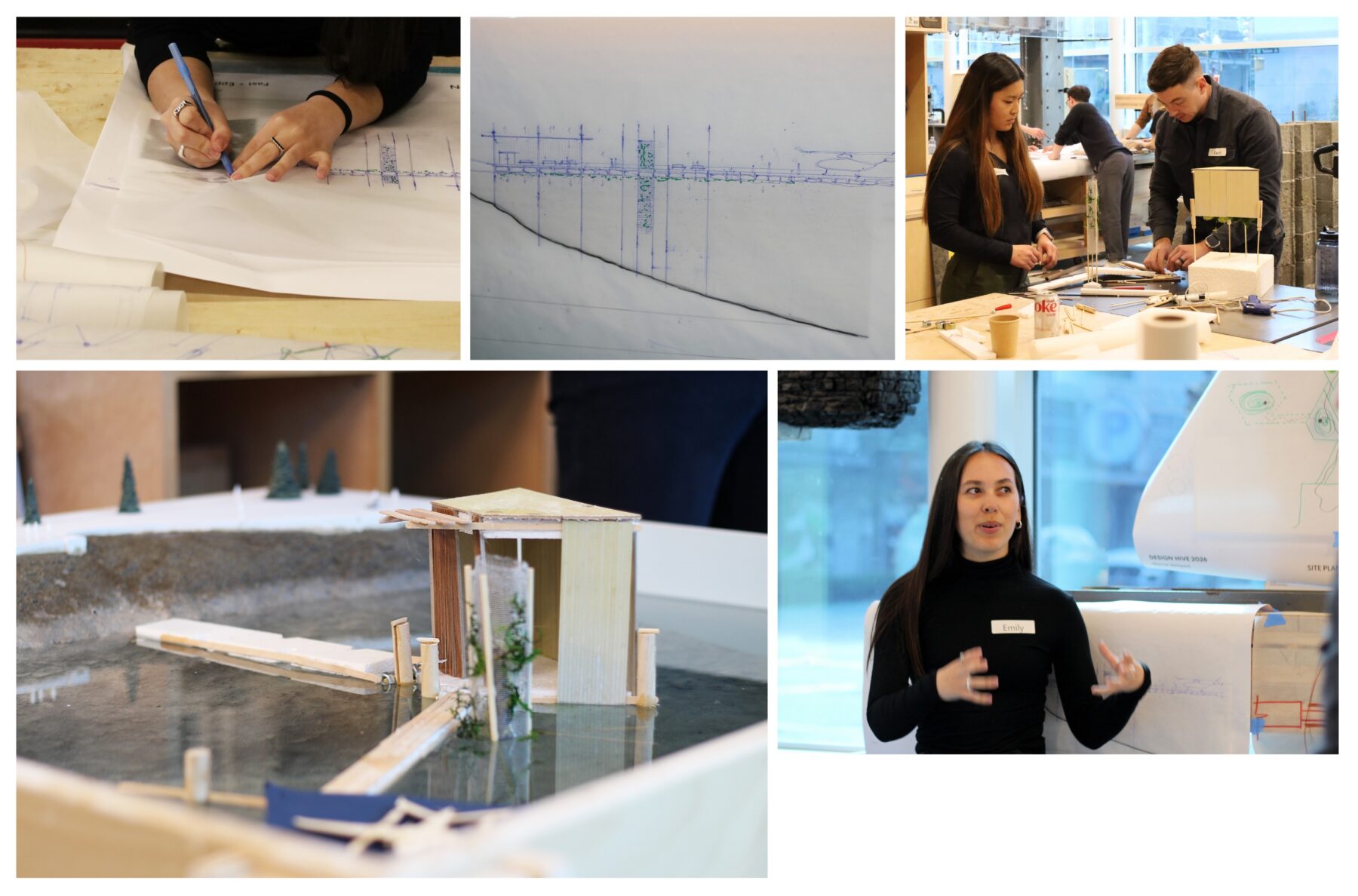
The walkways include screens with mesh attached to anchor blocks, so conditions and experience change as tides shift. The design focuses on staying connected to nature while integrating future technology.
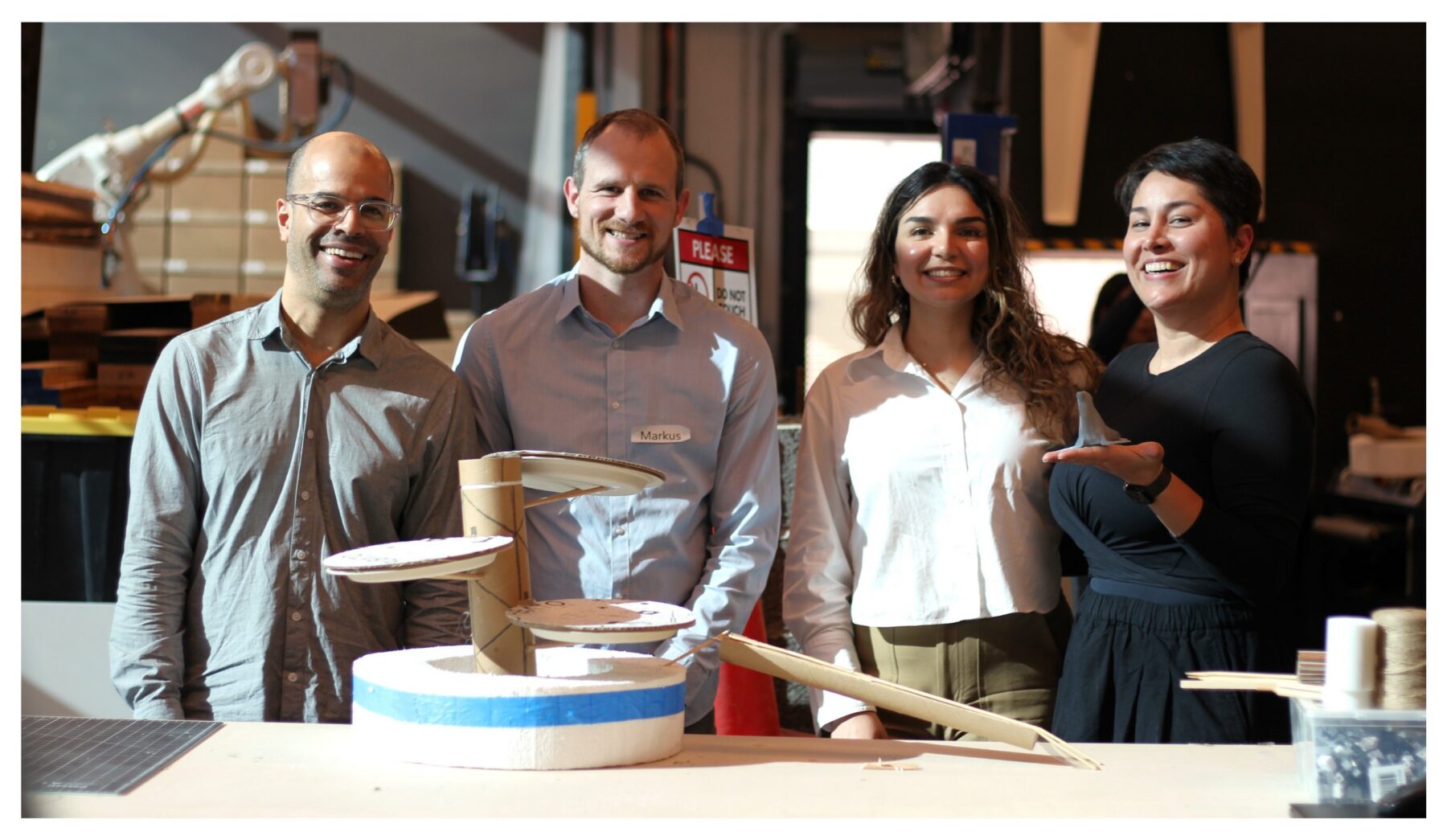
Team Four from left to right: Babak Manavi (Perkins&Will), Markus Fast (Fast + Epp), Kiana Youssefian (Fast + Epp), and Yalda Amin-Shahidi (Perkins&Will)
The overall form for team four’s concept was developed early on in the workshop, using a simple stick and circles to define the design direction and spatial arrangement.
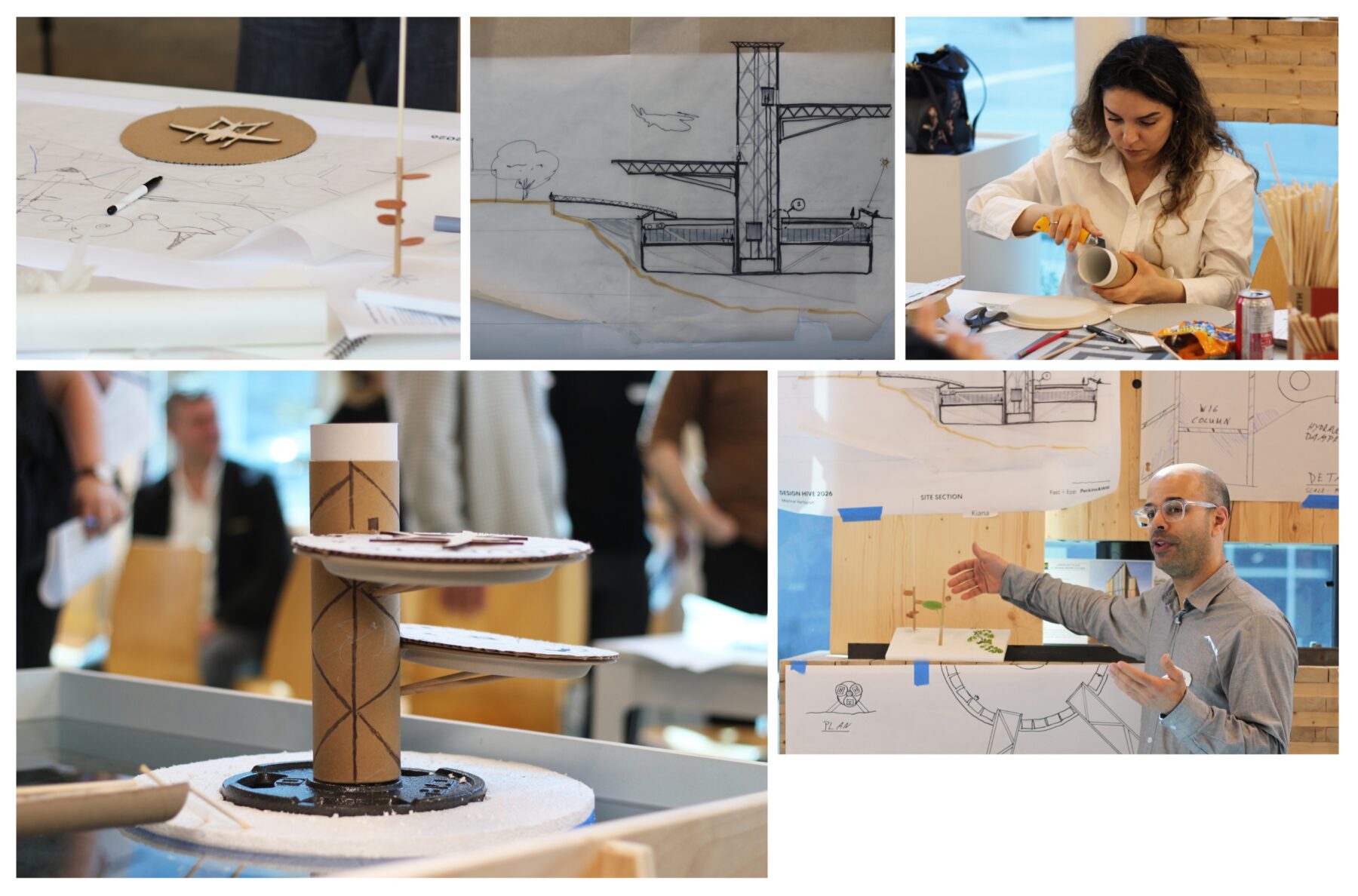
The model integrates various programs and amenities into the helipad, positioning it as a centre for the broader community. The entrance and ticketing area are designed into the underwater base of the structure, which also serves as a viewing platform for marine life below. Above this, a central pillar acts as the elevator and core, connecting the three landing platforms arranged in a spaced, petal-like formation at varying altitudes to allow multiple points for take-off and landing for eVTOLs.
Deliberation
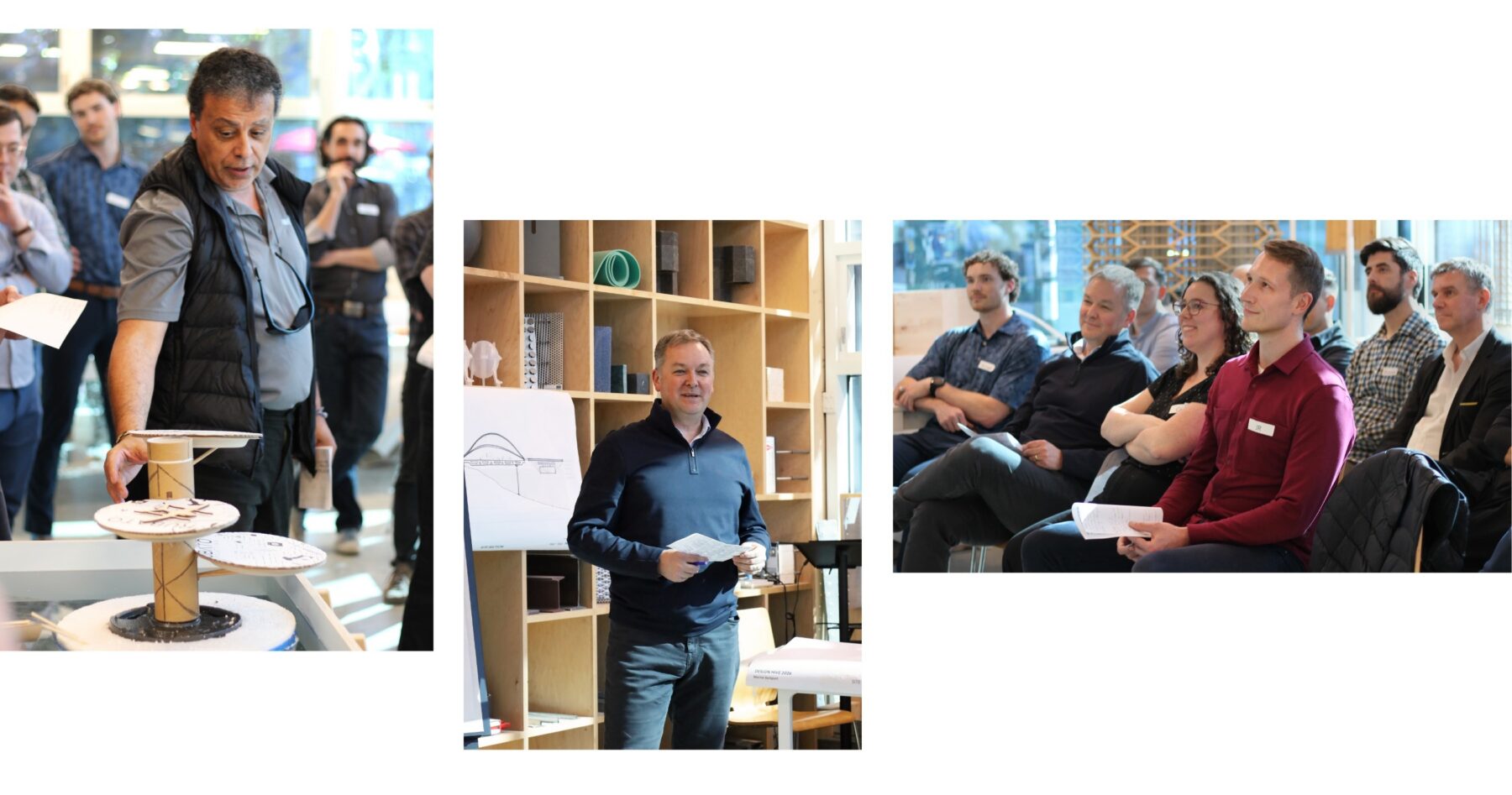
Designs were evaluated based on creativity and innovation, technical feasibility, sustainability, aesthetic appeal, and presentation. Each team brought forward a distinct vision for a marine landing pad, making it no easy task for the judges to select a winner.
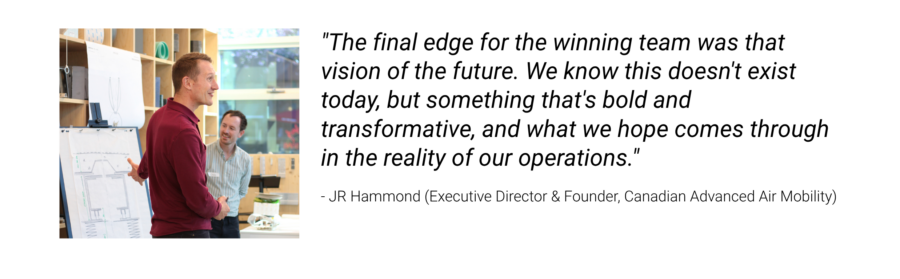
Congratulations to not only our winning team, team four, but to all the teams for the hard work and effort that went into each concept and model. They all demonstrated creativity, collaboration, and a strong commitment to thoughtful design under a tight deadline.
A special thank you to our judges and roaming mentors for sharing their time, and valuable insight to all the teams.
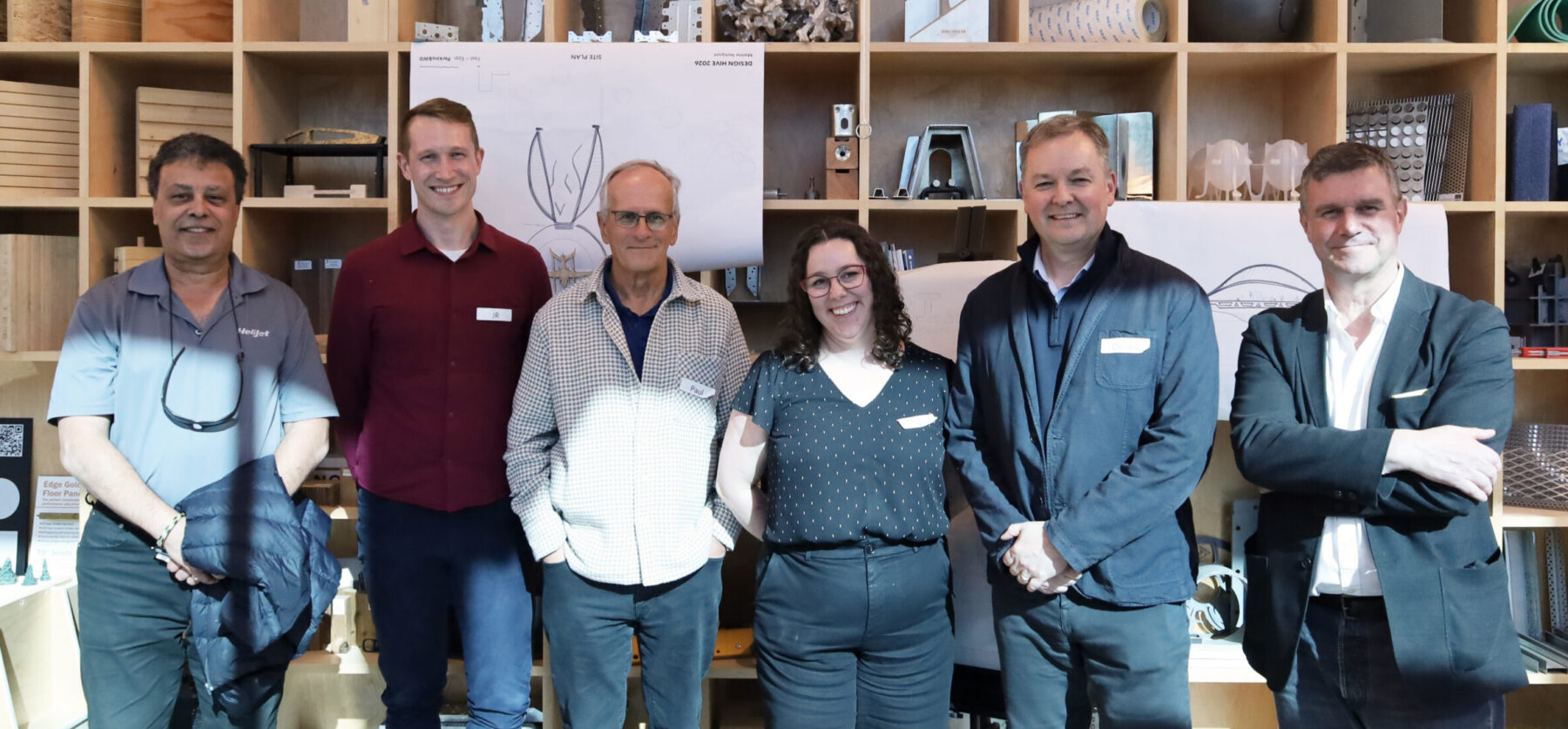
From left to right: Daniel Sitnam (President & CEO, Helijet International), JR Hammond (Executive Director & Founder, Canadian Advanced Air Mobility), Paul Fast (Founding Partner, Fast + Epp), Carla Dickof (Principal, Fast + Epp), Derek Newby (Principal and Managing Director, Perkins&Will), Adrian Watson (Principal and Design Director, Perkins&Will).
We are delighted to have had the opportunity to organize this Design Hive with Perkins&Will. The event highlights the value of close collaboration, and the innovative outcomes that emerge when disciplines intersect. Each Design Hive presents real-world challenges that encourage rapid, creative, and practical problem-solving, and we look forward to building on this momentum and hosting many more in the future.
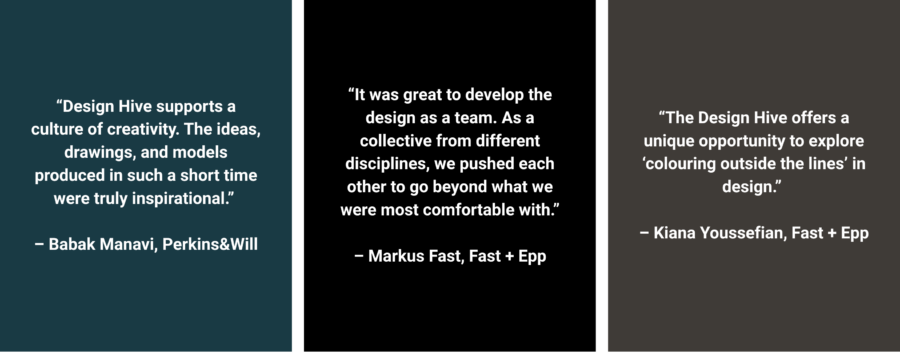
Here’s what some of our participants had to say about their experience:
Interested in your firm taking part in a future Design Hive? Reach out to Krystal Yee, at kyee@fastepp.com.