Workshop: Exploring Future Materials Through Interdisciplinary Design Collaboration
December 3, 2025
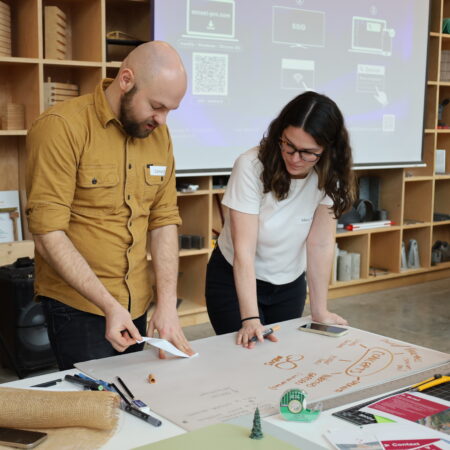
In November, Fast + Epp and Diamond Schmitt Architects gathered in our Concept Lab for a collaborative workshop focused on emerging and bio-based construction materials. The event gave teams the opportunity to explore how advanced materials could influence design, sustainability, and constructability in real-world projects.
Operating in teams of four—two architects and two engineers—participants were tasked with designing a 2,500 sq. ft. pavilion at UBC Botanical Gardens, within a 75m × 75m area that was north of the existing Garden Pavilion. The design needed to include welcome and presentation spaces, a washroom, and a covered outdoor area, all within a $1,000,000 budget and a 200kgCO₂/m² carbon limit. Teams had to use at least two of the seven presented advanced materials, showcasing how their properties could shape both form and experience while balancing sustainability, structural feasibility, and cost.
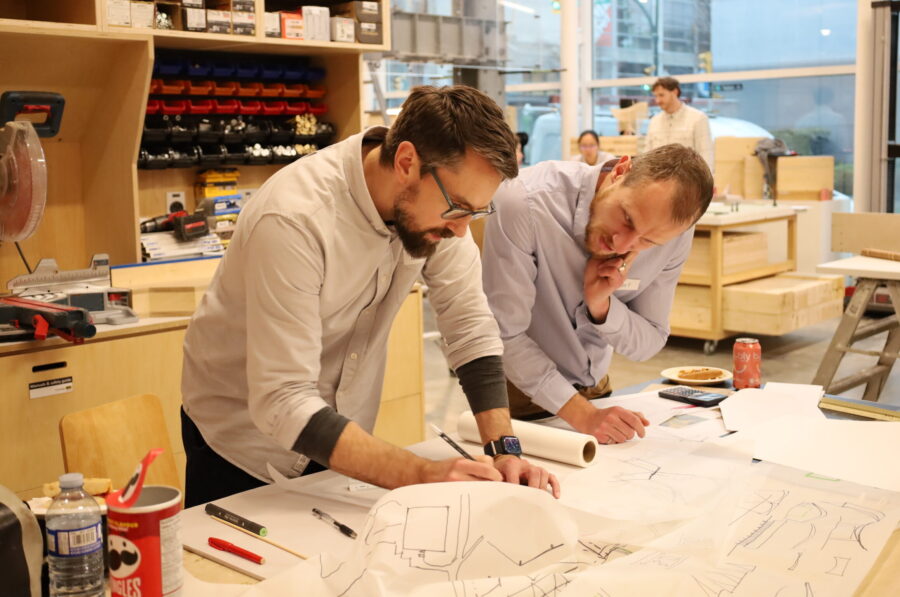
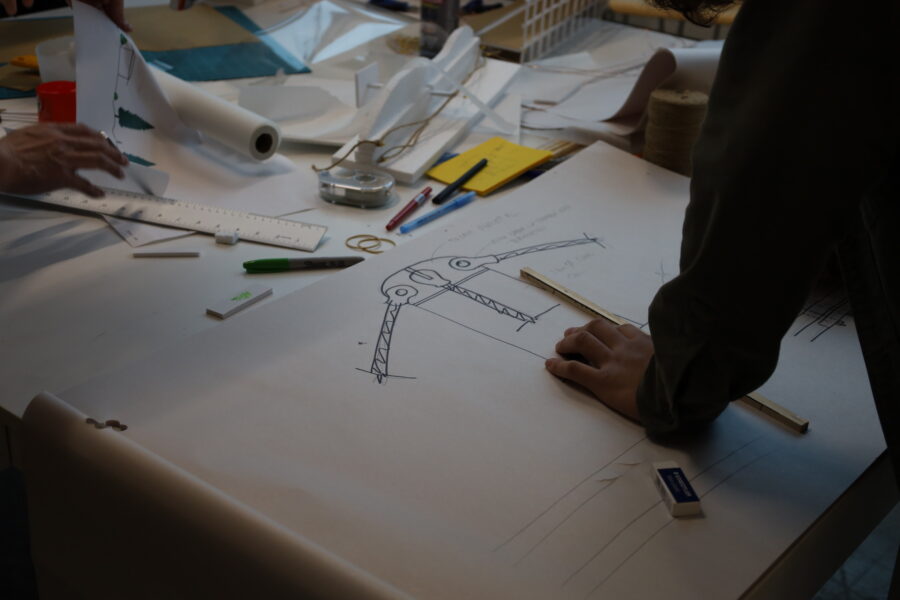
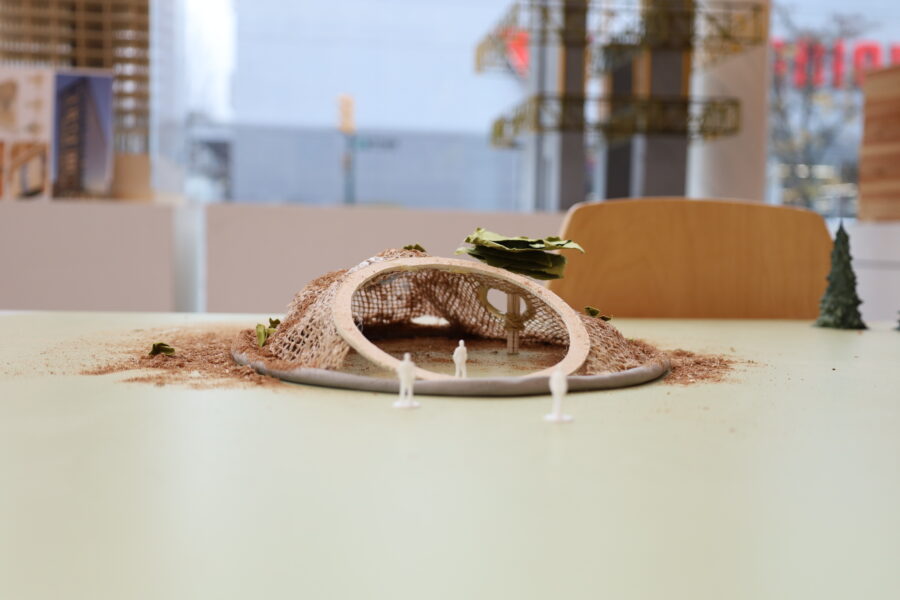
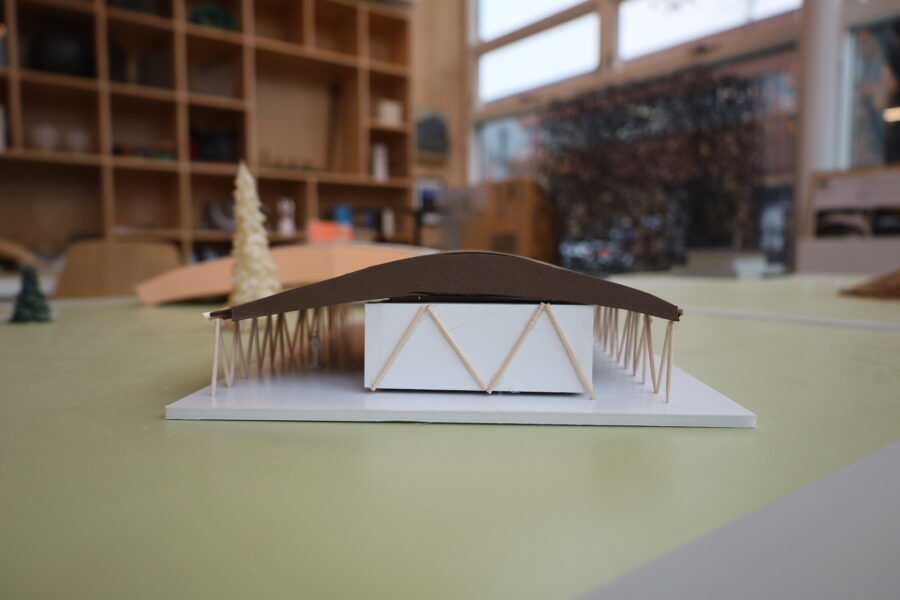
Throughout the afternoon, teams developed concepts, built models, and accounted for cost and carbon footprint using a relative scale metric. The advanced and bio-based materials were represented by alternative modeling materials, allowing participants to explore form, structure, and material expression in a hands-on, experimental way while testing the practical and aesthetic possibilities of their designs.
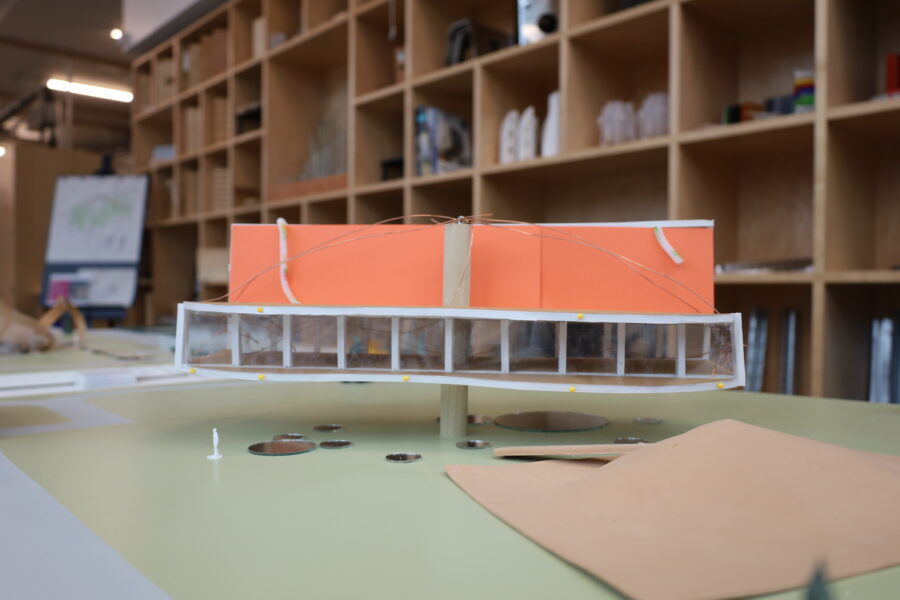
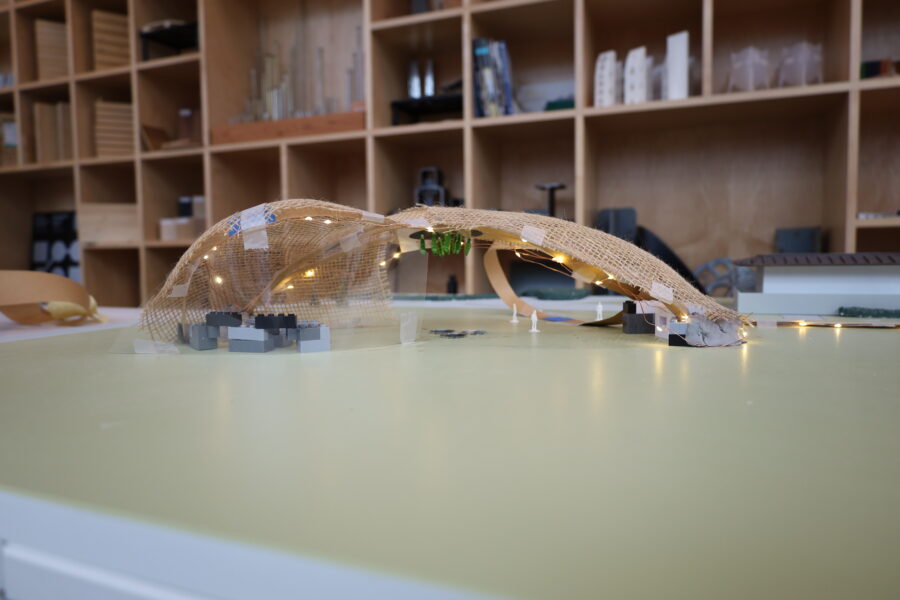
Designs were presented to a judging panel from both firms and evaluated on aesthetic appeal, creativity, sustainability, technical feasibility, and clarity of presentation. Each team’s exploration led to a unique design response. One group chose to integrate the pavilion seamlessly into the landscape, while another elevated their structure on a single column supported by re-centering cables to address wind and seismic forces. Others drew inspiration from arches and sweeping curves as defining elements. In the end, the winning team’s design was one that was recognized for balancing simplicity, openness, lightness, and thoughtful low-carbon material choices.
These workshops are designed to spark cross-disciplinary collaboration and encourage our teams to think beyond convention. By stepping outside day-to-day project constraints, participants can experiment, challenge convention, and explore new ways of integrating material innovation into design. We host several of these a year—each with its own unique challenge—to provide the team with opportunities to stretch their creativity and engage in hands-on, forward-thinking design.