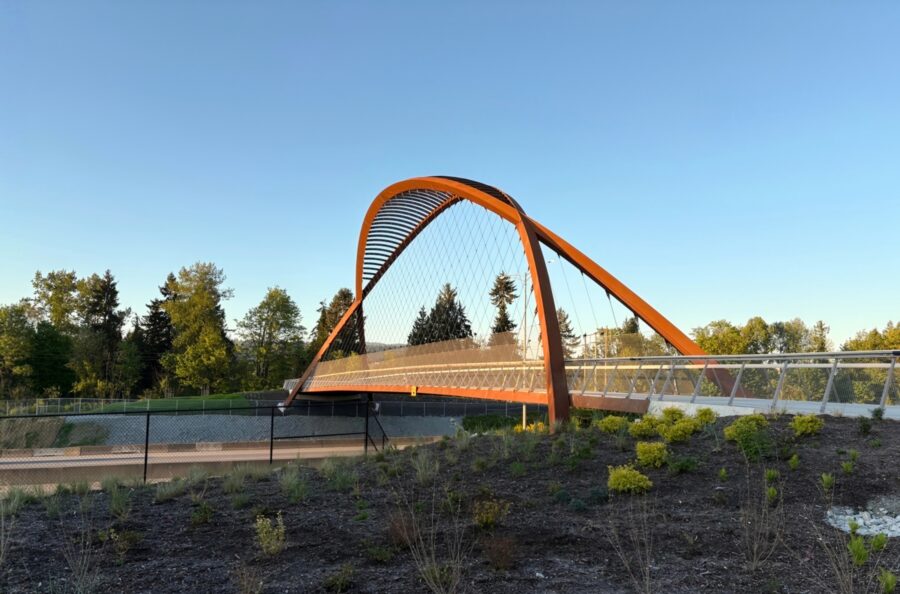
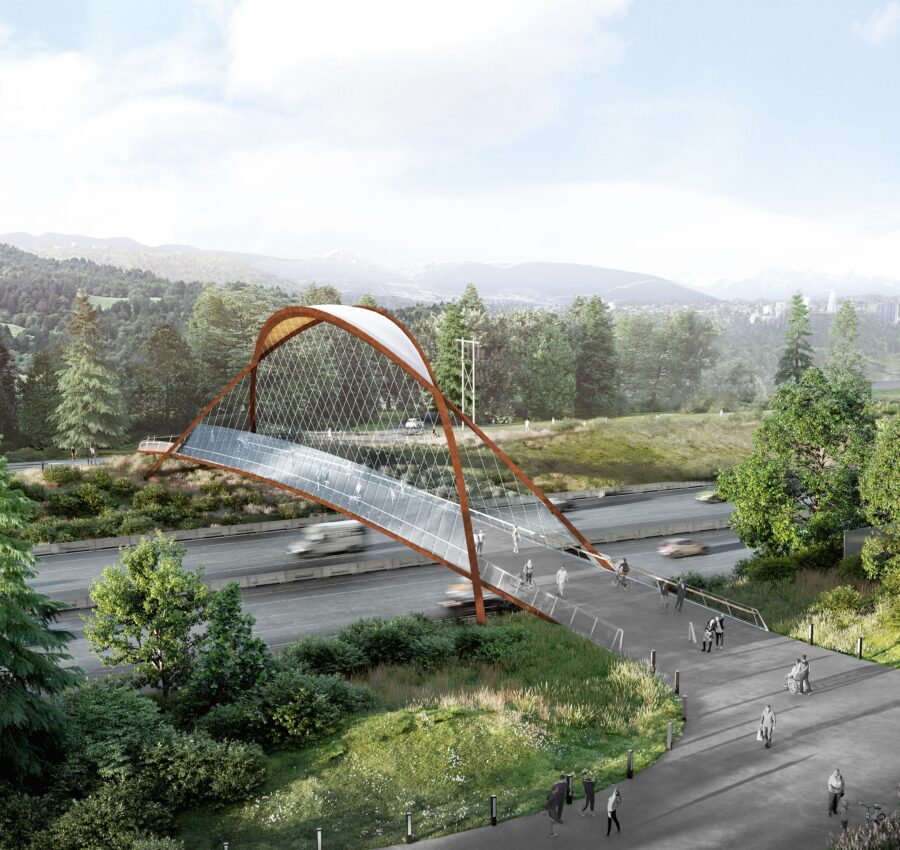
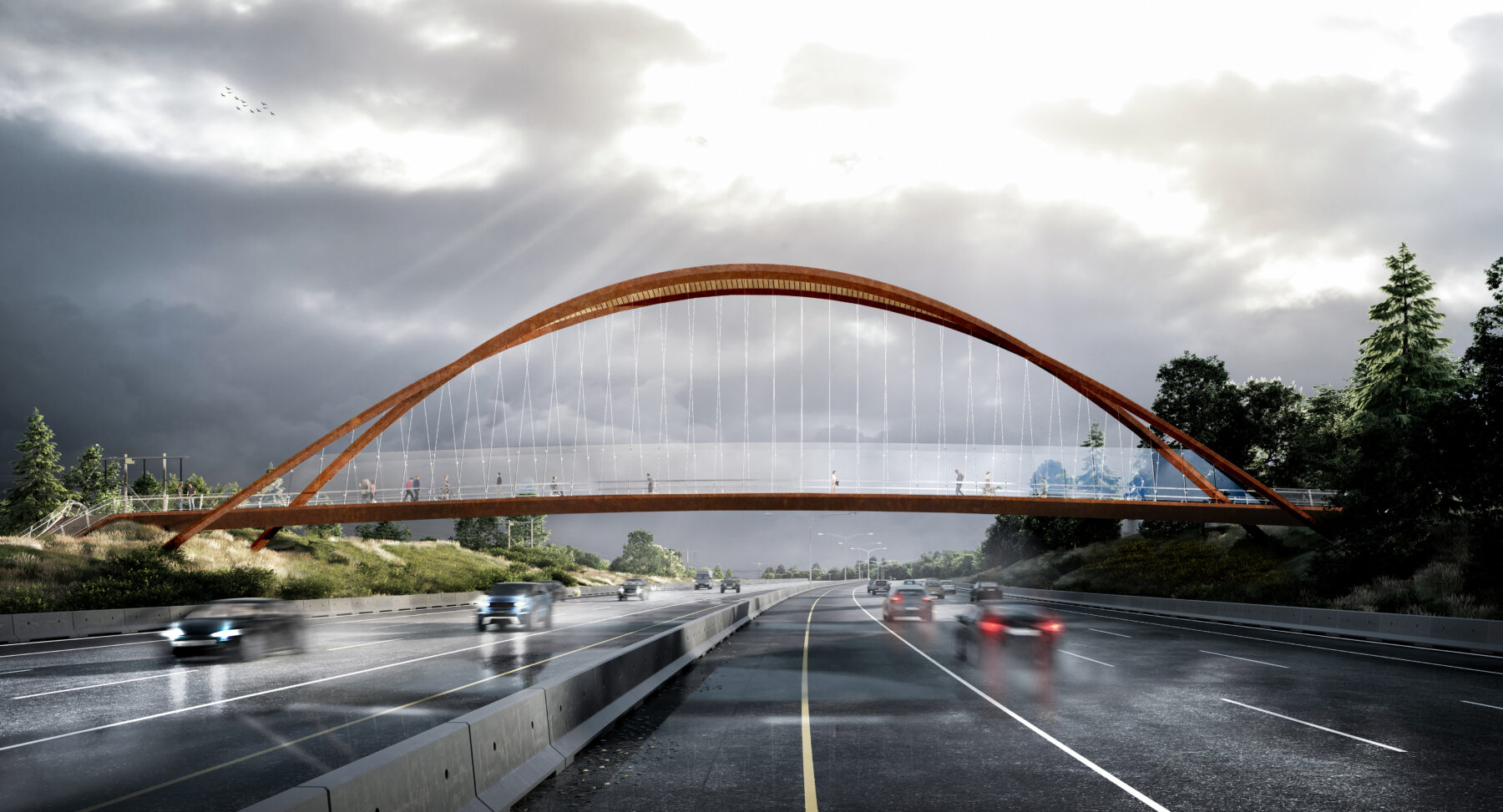
Spanning over the Trans-Canada Highway, the Burnaby Lake Overpass serves as a gateway to the City of Burnaby, providing a safe and convenient passage over the busy highway for pedestrians and cyclists, enhancing connectivity and promoting outdoor activities in the community. 

Our firm developed the concept structural design, establishing the vision that guided the final design and structure delivered by McElhanney. This iconic bridge design combines architectural elegance with structural integrity to create a visually striking and functional landmark.   

Project Essentials

  • LocationBurnaby, BC
  • ClientCity of Burnaby
  • ArchitectVIA – A Perkins Eastman Studio
  • CivilMcElhanney
  • Size62m span
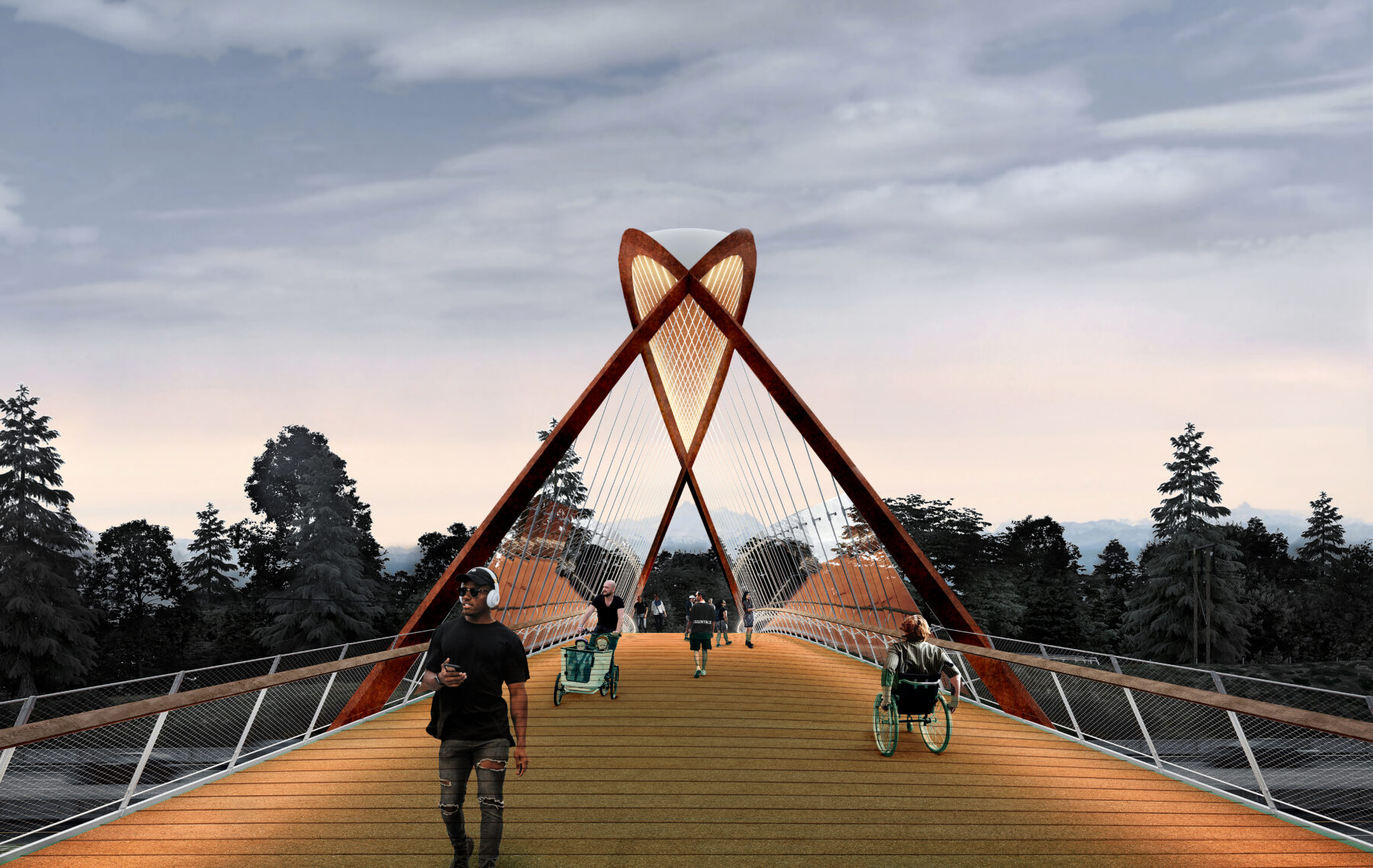
People walking over the Burnaby Lake Pedestrian Bridge render

The resulting bridge spans 62m with double intersecting parabolic steel arches that support a network of inter-weaving steel cables following the arch geometry. A diamond-shaped arch profile creates crisp, refined edges as the cables emerge from a single point in the cross-section.  

In addition to its architectural presence, the overpass was designed with long-term durability and sustainability in mind. Weathered (Corten) steel was selected for the arches and deck due to its inherent corrosion resistance, eliminating the need for protective coatings and reducing maintenance demands over the bridge’s lifespan. Rising 5.7 m above Highway 1, the structure offers wide, accessible ramp connections for both pedestrians and cyclists. 

Installation of this 400-tonne single prefabricated span successfully took place during an overnight highway closure in November 2025, where construction crews used two computer-controlled platforms to rotate the bridge 90 degrees into its final position. This carefully choreographed operation marked a significant achievement in the realization of this iconic landmark.  

It’s incredibly rewarding to see this design come to life in the community, with opening anticipated in early 2026.